About the Author Written by a Registered Dietitian (RD) with clinical experience in micronutrient management, vegetarian and Indian dietary practices, and hormonal nutrition. This guide is based on ICMR dietary guidelines, NIH Vitamin D recommendations, and peer-reviewed nutritional research. Expertise: Vegetarian & Vegan Nutrition | Micronutrient Deficiencies | Indian Dietary Practices | Clinical Dietetics | Hormonal Nutrition |
Introduction: The Sunshine Vitamin That Most People Are Missing
Vitamin D is often called the "sunshine vitamin" yet deficiency is strikingly common, even in sun-rich countries like India. Whether you eat meat or follow a strictly plant-based diet, the question is the same: am I getting enough Vitamin D?
Vitamin D is an essential nutrient that plays a key role in bone health, immunity, muscle function, mood regulation, and overall well-being. Despite abundant sunlight in tropical regions, Vitamin D deficiency remains extremely widespread driven by indoor lifestyles, sunscreen use, air pollution, clothing habits, and serious gaps in dietary intake.
The good news? Whether you follow a vegetarian or non-vegetarian diet, meeting your Vitamin D needs is absolutely possible with the right combination of diet, sunlight exposure, and sometimes supplementation. This guide breaks it all down clearly, practically, and for the Indian context.
What Is Vitamin D and What Does It Do in the Body?
Vitamin D is a fat-soluble nutrient that the body needs, alongside calcium, to build and maintain strong bones. The body can only absorb calcium efficiently when there is sufficient Vitamin D present — making it one of the most critical nutrients for skeletal health across all age groups.
But Vitamin D is far more than a bone vitamin. It also functions as a hormone, influencing hundreds of biological processes throughout the body from immune defence to brain function, muscle recovery to reproductive health.
Role of Vitamin D | What Happens When It Is Low |
Calcium & phosphorus absorption | Weak bones, poor dental health, risk of osteoporosis |
Bone and teeth strength | Rickets in children, osteomalacia in adults, fracture risk |
Immunity support | Frequent infections, slow healing, increased autoimmune risk |
Muscle function | Muscle weakness, cramps, difficulty with physical activity |
Mood regulation | Depression, anxiety, low motivation, seasonal mood changes |
Fatigue and energy | Persistent tiredness even after adequate rest |
Hormonal balance | Disrupted insulin, thyroid, and reproductive hormones |
Vitamin D Food Sources: Vegetarian vs Non-Vegetarian — Side by Side
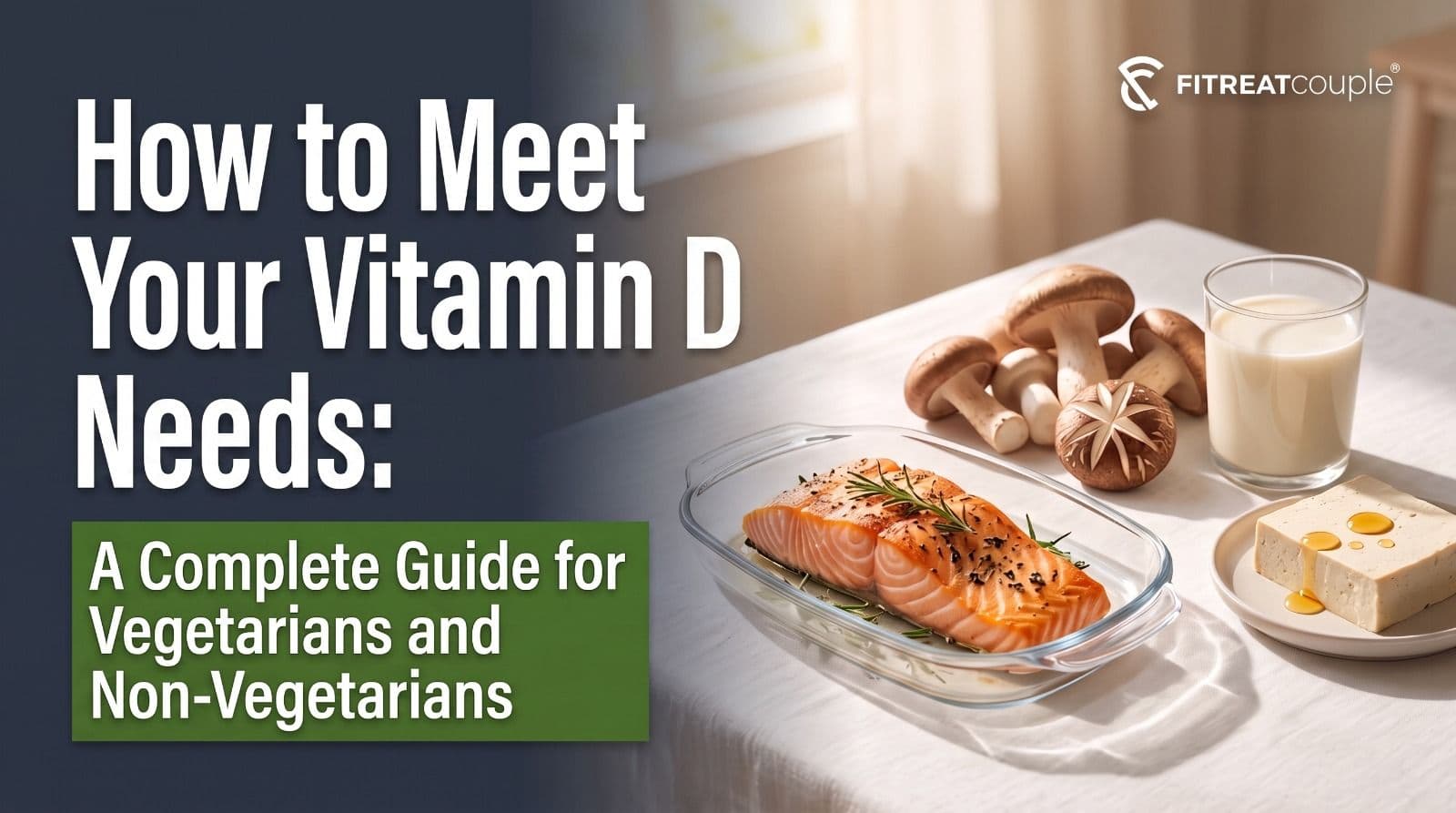
This is the section most people need most. Here is a clear, honest comparison of the best Vitamin D food sources for both dietary preferences:
Vegetarian Sources of Vitamin D | Non-Vegetarian Sources of Vitamin D |
Fortified milk & plant-based milks (soy, almond, oat) | Fatty fish — salmon, sardines, mackerel, tuna |
Fortified curd and yoghurt | Egg yolk — one of the most accessible sources |
Fortified breakfast cereals | Fish liver oil (cod liver oil) — highest natural source |
Sunlight-exposed / UV-treated mushrooms | Fortified dairy products (milk, yoghurt, cheese) |
Butter and cheese (small amounts) | Butter and cheese |
Fortified orange juice (where available) | Fortified foods and beverages |
Vitamin D Content in Foods: How Much Are You Actually Getting?
Understanding the actual Vitamin D content in foods helps you plan your diet more effectively. Here is a practical reference table:
Food Source | Diet Type | Vitamin D Content (approx.) | Practical Tip |
Cod liver oil (1 tbsp) | Non-Veg | 1,360 IU | Highest single food source — use carefully |
Salmon (85g, cooked) | Non-Veg | 570–600 IU | Eat 2–3 times/week for significant benefit |
Sardines (85g, canned) | Non-Veg | 164 IU | Affordable and easily available |
Egg yolk (1 large) | Non-Veg / Veg* | 40–50 IU | Include daily if tolerated |
UV-exposed mushrooms (100g) | Vegetarian | 400–450 IU | Place mushrooms gills-up in sunlight for 1–2 hrs |
Fortified milk (240ml) | Vegetarian | 100–120 IU | Most reliable daily vegetarian source |
Fortified plant milk (240ml) | Vegan | 100–120 IU | Soy milk has best protein + Vit D combination |
Fortified cereal (1 serving) | Vegetarian | 40–100 IU | Check label — brands vary widely |
Mackerel (85g, cooked) | Non-Veg | 360 IU | Affordable Indian fish with high Vitamin D |
Tuna (85g, canned) | Non-Veg | 154 IU | Convenient and widely available |
Vitamin D Sources for Vegetarians: A Deeper Look
If you follow a vegetarian diet, meeting Vitamin D needs takes more planning — but it is entirely achievable. Here is what works best:
1. Fortified Milk and Plant-Based Milks
Fortified cow's milk, soy milk, almond milk, and oat milk are among the most reliable and accessible Vitamin D sources for vegetarians in India. They typically provide 100–120 IU per cup (240ml). Drinking 2 cups per day contributes a meaningful portion of your daily needs.
• Check the nutrition label — not all brands are equally fortified
• Soy milk provides the best combination of Vitamin D and plant-based protein
• Pair with a meal containing fat for better absorption
2. UV-Exposed Mushrooms — Nature's Vegetarian Vitamin D Source
Mushrooms are the only significant plant-based food that can provide meaningful Vitamin D — but only when they have been exposed to ultraviolet light. You can even do this at home.
• Place fresh mushrooms gills facing up in direct outdoor sunlight for 1–2 hours
• Even 30–60 minutes of UV exposure can boost Vitamin D content to 400+ IU per 100g
• Look for commercially available UV-treated mushrooms in specialty stores
• Dried shiitake mushrooms exposed to sun also retain Vitamin D well
Try This at Home Place your mushrooms gills-side up on a tray outdoors in direct midday sunlight for 1–2 hours before cooking. This simple step can dramatically increase their Vitamin D content — turning an ordinary vegetable into one of the richest vegetarian sources available. |
3. Fortified Dairy Products
Fortified curd (yoghurt), paneer made from fortified milk, and certain fortified cheeses contribute small but meaningful amounts of Vitamin D alongside calcium. Make these a daily part of your diet.
4. Fortified Breakfast Cereals
Many branded breakfast cereals are fortified with Vitamin D. Always check the label — content varies widely between brands, ranging from 40 to 100 IU per serving. These work best as a supplementary source alongside other strategies.
Vitamin D Sources for Non-Vegetarians: Making the Most of Natural Sources
Non-vegetarians have access to some of the richest natural food sources of Vitamin D. Here is how to maximise their benefit:
1. Fatty Fish — The Richest Natural Source
Fatty fish are by far the most potent natural food source of Vitamin D available. Including them regularly in your diet makes a significant difference.
• Salmon — one of the highest sources, providing 570–600 IU per 85g serving
• Mackerel (Bangda) — widely available and affordable in India, providing around 360 IU per serving
• Sardines (Pedvey) — canned sardines are convenient and provide around 164 IU per serving
• Tuna — canned tuna is accessible and provides approximately 154 IU per serving
• Including fatty fish 2–3 times per week can contribute meaningfully to your weekly Vitamin D intake
2. Egg Yolk — The Most Accessible Everyday Source
Egg yolk is one of the most practical and accessible natural sources of Vitamin D for non-vegetarians. Each egg yolk provides approximately 40–50 IU — modest on its own, but valuable as a daily habit.
• Include whole eggs (not just whites) to benefit from the Vitamin D in the yolk
• Eggs from free-range or pasture-raised hens that are exposed to sunlight have significantly higher Vitamin D content
• Pairing eggs with healthy fats (avocado, ghee, nuts) enhances Vitamin D absorption
3. Cod Liver Oil — Highest Single Food Source
Cod liver oil provides the highest natural concentration of Vitamin D of any food — approximately 1,360 IU per tablespoon. It also contains Vitamin A and omega-3 fatty acids. However, it should be used carefully under dietitian guidance as excessive intake can lead to Vitamin A toxicity.
The Role of Sunlight: Your Most Powerful Free Source of Vitamin D
Sunlight is the most effective and natural source of Vitamin D — responsible for producing 80–90% of the Vitamin D in the human body under ideal conditions. For both vegetarians and non-vegetarians, optimising sunlight exposure is non-negotiable.
Factor | Recommendation | Why It Matters |
Time of day | 10 AM – 3 PM | Only time UVB rays are strong enough for Vitamin D synthesis in India |
Duration | 15–30 minutes | Adequate for lighter skin; darker skin may need up to 45–60 minutes |
Body area | Face, arms, or legs (bare skin) | Larger bare skin area = more Vitamin D produced per session |
Frequency | 3–5 times per week | Consistent exposure builds and maintains Vitamin D levels over time |
Sunscreen | Avoid during short exposure | SPF 15+ blocks up to 99% of UVB — apply after 15–20 minutes |
Glass/windows | Avoid indoor sun | Glass completely blocks UVB rays — outdoor direct exposure only |
Skin tone | Darker skin needs more time | Higher melanin reduces UVB absorption — increase exposure duration |
Common Mistake Many people sit near a sunny window or step outside early in the morning, thinking they are getting enough sun for Vitamin D. Unfortunately, glass completely blocks UVB rays, and early morning or late evening sunlight is too low in UVB intensity to trigger Vitamin D synthesis. Midday direct outdoor exposure on bare skin is what truly counts. |
Do You Need Vitamin D Supplements? Who Benefits Most
Even with the best diet and consistent sunlight exposure, many people — especially vegetarians, urban dwellers, and those with certain health conditions — still struggle to maintain optimal Vitamin D levels. In these cases, supplementation under medical or dietitian guidance is the safest and most effective solution.
Who Needs Supplements | Supplement Type | Key Advice |
Strict vegetarians / vegans | Vitamin D3 (lichen-based, vegan) or D2 | D3 is more effective; vegan D3 from lichen is widely available |
Elderly individuals (65+) | Vitamin D3 — higher dose often needed | Skin synthesis declines with age; supplementation essential |
Indoor workers / night-shift | Vitamin D3 daily or weekly dose | Minimal sun exposure makes supplementation necessary |
People with confirmed deficiency | High-dose D3 (prescription strength) | Dose based on blood test — always under doctor or dietitian guidance |
Pregnant & breastfeeding women | Vitamin D3 — essential during pregnancy | Critical for foetal bone development and maternal immunity |
People with PCOD / thyroid / obesity | Vitamin D3 with fat-containing meal | Absorption issues require careful dosing and monitoring |
Vitamin D3 vs D2 — Which Is Better? Vitamin D3 (cholecalciferol) is more effective than Vitamin D2 (ergocalciferol) at raising and maintaining blood Vitamin D levels. For vegetarians, vegan Vitamin D3 derived from lichen (a plant-based source) is now widely available and equally effective as animal-derived D3. Always choose D3 over D2 when supplementing. |
Your Personalised Vitamin D Action Plan
For Vegetarians
• Drink 2 cups of fortified milk or plant milk daily
• Place mushrooms in direct midday sunlight for 1–2 hours before cooking — do this regularly
• Include fortified curd, cereals, and dairy consistently
• Get 15–30 minutes of direct midday sunlight on bare skin at least 4 times a week
• Get your 25-OH Vitamin D blood test done — supplement with Vitamin D3 if levels are below 30 ng/mL
For Non-Vegetarians
• Eat fatty fish (salmon, mackerel, sardines) 2–3 times per week
• Include whole eggs daily — do not discard the yolk
• Get 15–30 minutes of direct midday sunlight regularly
• Supplement with Vitamin D3 if blood test confirms deficiency
• Take Vitamin D supplements with a fat-containing meal for maximum absorption
For Everyone — Regardless of Diet
• Test your Vitamin D levels at least once a year — a simple 25-OH Vitamin D blood test
• Do not supplement blindly — excess Vitamin D can cause toxicity and hypercalcaemia
• Consult a Registered Dietitian for a personalised Vitamin D plan based on your diet, lifestyle, and blood results
• Pair all Vitamin D sources — food, sunlight, and supplements — with adequate calcium and magnesium for best results
Frequently Asked Questions (FAQ)
Q1: Can vegetarians get enough Vitamin D from food alone?
It is very challenging. Natural plant-based foods contain little to no Vitamin D, with the exception of UV-exposed mushrooms. Vegetarians need to rely on a combination of fortified foods, strategic sunlight exposure, and often supplementation to meet their Vitamin D requirements consistently.
Q2: Which is the best Vitamin D food source for non-vegetarians?
Fatty fish such as salmon, mackerel, and sardines are the richest natural food sources of Vitamin D. Cod liver oil provides the highest single-serving content. Egg yolks are the most practical everyday source. Including fatty fish 2–3 times per week alongside daily eggs can significantly support Vitamin D status.
Q3: Do UV-exposed mushrooms really provide Vitamin D?
Yes — mushrooms exposed to direct ultraviolet light can produce significant amounts of Vitamin D2. Placing mushrooms gills-up in direct midday sunlight for 1–2 hours before cooking can boost their Vitamin D content to 400 IU or more per 100g. This makes them one of the few genuinely effective plant-based Vitamin D sources.
Q4: What is the best time to get sunlight for Vitamin D?
Between 10 AM and 3 PM is the optimal window for UVB-rich sunlight in India. Early morning and late evening sunlight does not contain enough UVB intensity for Vitamin D synthesis. Direct outdoor exposure of face, arms, or legs for 15–30 minutes, 3–5 times per week, is the most effective natural strategy.
Q5: Should I take Vitamin D3 or D2 supplements?
Vitamin D3 (cholecalciferol) is more effective at raising and maintaining blood Vitamin D levels compared to D2 (ergocalciferol). Vegetarians and vegans can choose lichen-derived vegan D3, which is equally effective as animal-sourced D3. Always take Vitamin D supplements with a fat-containing meal for optimal absorption.
Q6: How much Vitamin D should I take daily?
The ICMR recommends 600 IU per day for adults under 70 and 800 IU for those above 70. However, therapeutic doses for deficiency correction are often much higher — typically 1,000 to 4,000 IU daily, or a larger weekly dose — and should always be determined based on blood test results in consultation with a doctor or dietitian.
Conclusion
Meeting your Vitamin D needs is absolutely possible — whether you are vegetarian or non-vegetarian — with the right knowledge and the right strategy. Non-vegetarians have access to natural, potent food sources like fatty fish and eggs. Vegetarians must rely more creatively on fortified foods, UV-exposed mushrooms, and consistent sunlight exposure.
For both groups, a combination of a balanced diet, regular and strategic sun exposure, and periodic blood testing is the most effective and sustainable approach to maintaining optimal Vitamin D levels. When diet and sunlight are not enough — which is the case for millions of Indians — supplementation under dietitian or medical guidance bridges the gap safely and effectively.
Final Advice from the Dietitian Do not guess your Vitamin D status — get tested. A simple 25-OH Vitamin D blood test gives you a clear picture. Then work with a Registered Dietitian to build a personalised plan that fits your diet, lifestyle, and health goals. Vitamin D is not just about bones — it is about your immunity, energy, mood, hormones, and long-term health. It deserves your full attention. |